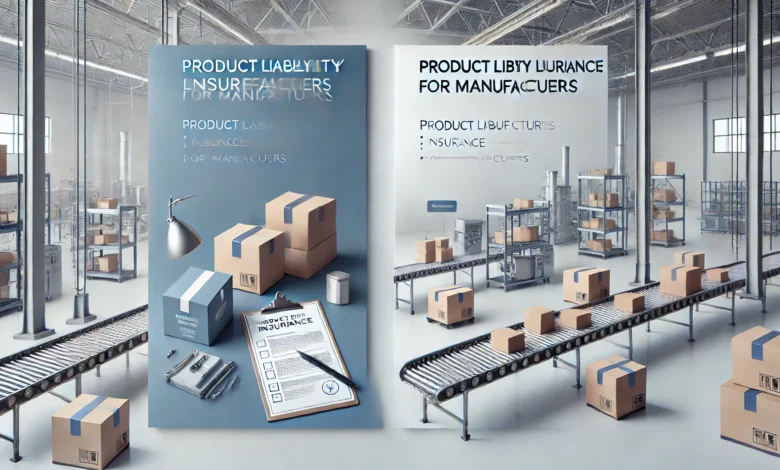
Product liability insurance for manufacturers is a form of coverage designed to protect manufacturing businesses from financial losses caused by claims that their products caused injury, property damage, or financial harm. In the first paragraph, it is important to understand that even well-designed and carefully tested products can fail, be misused, or be perceived as defective. When that happens, manufacturers are often held legally responsible. Product liability insurance exists to manage this risk, safeguard business continuity, and protect long-term brand reputation.
What Is Product Liability Insurance?
Product liability insurance is a policy that covers legal costs, settlements, and damages arising from claims that a product caused harm. These claims may involve physical injuries, property damage, or economic losses attributed to defects or failures.
For manufacturers, liability can arise at any stage of the product lifecycle, including design, manufacturing, assembly, labeling, packaging, and distribution.
Unlike general liability insurance, which covers accidents occurring on premises or during operations, product liability insurance focuses specifically on risks associated with products after they leave the manufacturer’s control.
Why Product Liability Insurance Is Essential for Manufacturers
Manufacturers operate in a high-risk legal environment. Product recalls, consumer lawsuits, and regulatory actions are increasingly common across industries.
A single product defect can result in multiple claims, class-action lawsuits, or large settlements that threaten a company’s financial stability.
Even when a manufacturer believes a claim is unfounded, legal defense costs alone can be substantial.
Product liability insurance ensures manufacturers can respond effectively to claims without jeopardizing operations or solvency.
Common Types of Product Liability Claims
Design Defects
Design defect claims allege that a product is inherently unsafe due to its design, even when manufactured correctly.
These claims often involve engineering decisions, material choices, or insufficient safety features.
Manufacturing Defects
Manufacturing defect claims arise when a product deviates from its intended design during production.
This may include assembly errors, faulty components, or quality control failures.
Failure to Warn or Inadequate Instructions
Manufacturers may be liable if products lack proper warnings, instructions, or labels.
Even safe products can become dangerous if users are not adequately informed of risks or proper usage.
Who Needs Product Liability Insurance?
Any manufacturer that produces physical goods should consider product liability insurance essential.
This includes large-scale industrial manufacturers, small production shops, private-label producers, and contract manufacturers.
Manufacturers supplying components may also face liability if their parts contribute to product failure.
In many cases, customers, distributors, or retailers require manufacturers to carry product liability insurance as a condition of doing business.
What Product Liability Insurance Typically Covers
Legal defense costs, including attorney fees and court expenses.
Settlements or judgments awarded to claimants.
Medical expenses related to injuries caused by the product.
Property damage resulting from product failure.
Some policies may also include coverage for recall-related expenses, depending on policy terms.
What Is Usually Not Covered
Intentional misconduct or fraudulent behavior.
Known defects that were not addressed.
Contractual liability beyond standard legal responsibility.
Product recalls unless specifically endorsed.
Damage to the manufacturer’s own products.
Understanding exclusions is critical when evaluating coverage.
Real-World Examples of Product Liability Risk
A machinery manufacturer faces a lawsuit after a safety guard fails, causing worker injury.
A consumer goods manufacturer is sued over defective materials that lead to property damage.
An electronics manufacturer faces multiple claims after overheating components cause fires.
In each case, product liability insurance plays a critical role in managing legal and financial exposure.
Cost of Product Liability Insurance for Manufacturers
The cost of product liability insurance varies widely based on risk factors.
Key pricing factors include product type, industry, annual revenue, production volume, claims history, and geographic market.
High-risk products such as medical devices, automotive components, or chemicals typically carry higher premiums.
While premiums represent a recurring cost, they are often far lower than the potential cost of a single major claim.
Benefits of Product Liability Insurance
Financial protection against costly lawsuits.
Improved credibility with customers and partners.
Support for legal defense and claims management.
Business continuity during disputes.
Protection of brand reputation and long-term viability.
Challenges and Limitations
Coverage limits may be insufficient for large claims.
Policy exclusions can leave gaps if not carefully reviewed.
Premiums may increase after claims.
Insurance does not replace the need for strong quality control and risk management.
Product Liability Insurance vs General Liability Insurance
| Aspect | General Liability | Product Liability |
|---|---|---|
| Primary Focus | Premises and operations | Product-related harm |
| When Coverage Applies | During business activities | After product is sold |
| Typical Claims | Slip and fall, property damage | Defective product injuries |
| Manufacturer Risk | Moderate | High |
How to Choose the Right Product Liability Policy
Assess the specific risks associated with your products.
Review coverage limits and ensure they align with potential exposure.
Understand policy exclusions and endorsements.
Work with insurers experienced in your manufacturing sector.
Review contracts with customers to ensure insurance requirements are met.
Reassess coverage regularly as products or markets change.
Risk Management Beyond Insurance
Product liability insurance is only one part of a broader risk management strategy.
Strong quality control, thorough testing, clear documentation, and effective recall procedures reduce risk.
Employee training and supplier oversight also play critical roles.
Insurance complements these efforts by providing financial protection when prevention fails.
Frequently Asked Questions
Is product liability insurance legally required?
It is not always legally required, but it is often contractually required and strongly recommended.
Does product liability insurance cover recalls?
Only if recall coverage is specifically included or endorsed.
Can small manufacturers afford product liability insurance?
Yes. Policies are available for businesses of all sizes, and costs are often manageable compared to risk exposure.
Does insurance cover international sales?
Coverage depends on policy terms and territory definitions.
Conclusion: Why Product Liability Insurance Matters for Manufacturers
Product liability insurance for manufacturers is a critical safeguard in a complex and litigious marketplace.
No manufacturer is immune to defects, misuse, or claims—even with the best processes in place.
By transferring a portion of this risk to an insurance provider, manufacturers protect their finances, reputation, and long-term operations.
When combined with strong quality systems and proactive risk management, product liability insurance becomes a cornerstone of sustainable and responsible manufacturing.