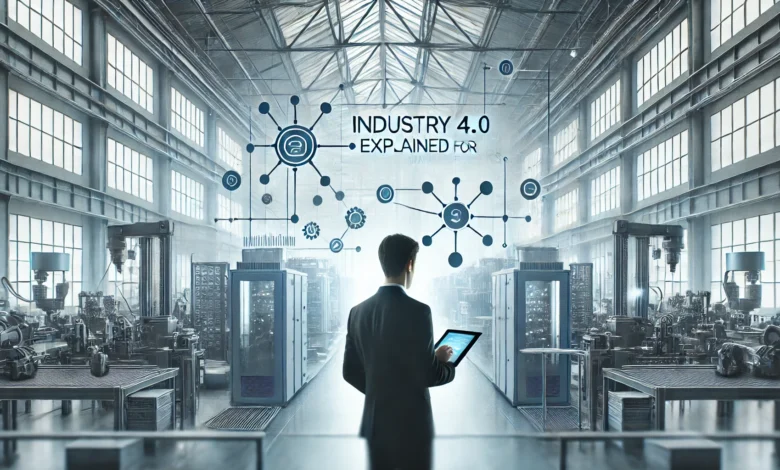
Industry 4.0 refers to the fourth major transformation in manufacturing, where digital technologies, connected systems, and intelligent automation come together to create smart, data-driven factories. For manufacturers, Industry 4.0 is not just a buzzword or a technology trend—it represents a fundamental shift in how products are designed, produced, monitored, and delivered. In the first paragraph, it is important to understand that Industry 4.0 is about using data, connectivity, and automation to improve efficiency, flexibility, quality, and competitiveness in an increasingly demanding global market.
What Is Industry 4.0?
Industry 4.0 is the integration of digital technologies into manufacturing and industrial processes. It builds on earlier industrial revolutions by combining physical production with digital intelligence.
The first industrial revolution introduced mechanization through water and steam power. The second brought mass production using electricity. The third introduced computers and basic automation. Industry 4.0 goes further by connecting machines, systems, and people through data networks, enabling real-time decision-making and self-optimizing operations.
In practical terms, Industry 4.0 allows machines to communicate with each other, systems to analyze data automatically, and factories to respond dynamically to changes in demand or conditions.
Why Industry 4.0 Matters to Manufacturers
Manufacturers today face intense pressure from rising costs, supply chain disruptions, labor shortages, and increasing customer expectations for speed and customization.
Traditional manufacturing models rely heavily on manual processes, fixed production schedules, and reactive problem-solving. These approaches are often too slow and inflexible for modern markets.
Industry 4.0 helps manufacturers stay competitive by improving visibility, reducing waste, increasing productivity, and enabling faster, more informed decisions.
Core Technologies Behind Industry 4.0
Internet of Things (IoT)
IoT devices and sensors collect real-time data from machines, tools, and the production environment. This data provides visibility into machine health, performance, and operating conditions.
IoT enables predictive maintenance, real-time monitoring, and improved process control.
Data Analytics and Big Data
Industry 4.0 generates large volumes of data. Advanced analytics tools turn this data into insights that help manufacturers optimize processes, detect anomalies, and forecast outcomes.
Data-driven decisions replace guesswork with measurable evidence.
Automation and Robotics
Smart automation goes beyond repetitive tasks. Robots and automated systems can adapt to changes, collaborate with humans, and perform complex operations with precision.
This improves consistency, safety, and productivity.
Artificial Intelligence and Machine Learning
AI systems learn from data and improve over time. In manufacturing, AI is used for quality inspection, demand forecasting, process optimization, and predictive maintenance.
These systems enable factories to anticipate problems instead of reacting to them.
Cloud and Edge Computing
Cloud platforms store and process large amounts of data, making information accessible across locations.
Edge computing processes data closer to machines, reducing latency and enabling real-time control.
How Industry 4.0 Changes Manufacturing Operations
Industry 4.0 transforms factories from isolated production lines into connected ecosystems.
Machines share data automatically. Production schedules adjust based on real-time demand. Maintenance activities are planned based on actual equipment condition.
Managers gain a holistic view of operations, from raw materials to finished products, enabling faster and more accurate decisions.
Key Benefits of Industry 4.0 for Manufacturers
One of the biggest benefits is improved efficiency. Automated data collection and analysis reduce downtime, waste, and rework.
Industry 4.0 improves product quality by detecting defects early and maintaining consistent production conditions.
Flexibility increases as factories can adapt quickly to changes in product design, volume, or customer requirements.
Enhanced visibility supports better planning, inventory control, and supply chain coordination.
Overall, Industry 4.0 helps manufacturers reduce costs while increasing responsiveness.
Real-World Industry 4.0 Use Cases
A manufacturing plant uses IoT sensors and analytics to predict equipment failures weeks in advance, reducing unplanned downtime.
An electronics manufacturer applies AI-based visual inspection to identify defects faster and more accurately than manual checks.
An automotive factory uses connected systems to synchronize production with supplier deliveries, minimizing inventory and delays.
These examples show how Industry 4.0 delivers measurable operational improvements.
Cost and Investment Considerations
Implementing Industry 4.0 requires investment in technology, infrastructure, and skills.
Costs may include sensors, software platforms, automation equipment, cybersecurity, and training.
While upfront costs can be significant, many manufacturers see strong returns through lower downtime, reduced scrap, improved productivity, and better asset utilization.
Many companies adopt Industry 4.0 gradually, starting with pilot projects and scaling over time.
Challenges of Industry 4.0 Adoption
Legacy systems can be difficult to integrate with modern digital technologies.
Data security and cybersecurity risks increase as more devices become connected.
Skill gaps can slow adoption, as employees need training in digital tools and data analysis.
Change management is also critical. Industry 4.0 requires cultural as well as technical transformation.
Industry 4.0 vs Traditional Manufacturing
| Aspect | Traditional Manufacturing | Industry 4.0 Manufacturing |
|---|---|---|
| Data Collection | Manual or periodic | Real-time and automated |
| Decision-Making | Reactive | Predictive and data-driven |
| Flexibility | Limited | High |
| Downtime | Unplanned | Predictable and reduced |
How Manufacturers Can Start with Industry 4.0
Manufacturers should begin by identifying operational pain points where data and automation can deliver quick wins.
Start small with pilot projects such as predictive maintenance or real-time production monitoring.
Ensure data quality and cybersecurity from the outset.
Invest in training and involve employees early to encourage adoption.
Industry 4.0 is a journey, not a one-time project.
Frequently Asked Questions About Industry 4.0
Is Industry 4.0 only for large manufacturers?
No. Small and mid-sized manufacturers can also benefit by adopting scalable, cloud-based solutions.
Does Industry 4.0 replace human workers?
No. It augments human work by automating repetitive tasks and supporting better decision-making.
How long does it take to see results?
Many manufacturers see measurable improvements within months of targeted implementations.
Is Industry 4.0 expensive?
Costs vary, but phased adoption helps manage investment and risk.
Conclusion: Industry 4.0 for Manufacturers
Industry 4.0 represents a powerful shift in how manufacturing works. It connects machines, data, and people to create smarter, more efficient, and more resilient operations.
While adoption requires investment and change, the benefits—improved efficiency, flexibility, quality, and competitiveness—are substantial.
For manufacturers facing increasing complexity and competition, Industry 4.0 is not just a technological upgrade. It is a strategic approach to building factories that are ready for the future.