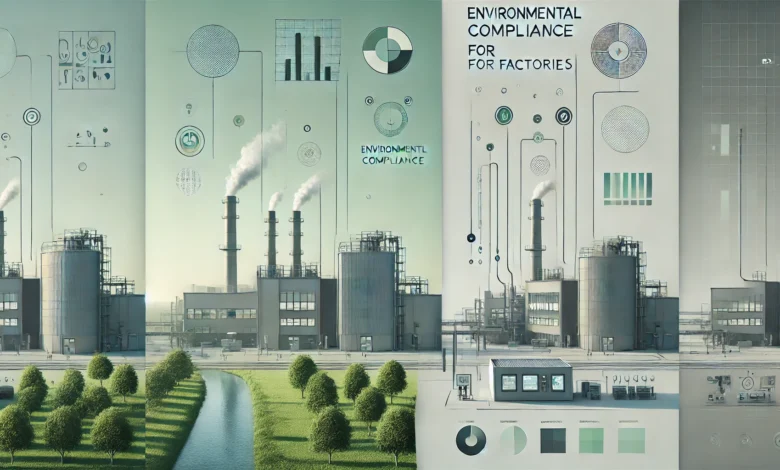
Environmental compliance for factories refers to the legal, regulatory, and operational requirements manufacturers must follow to minimize their impact on the environment. In simple terms, it ensures that factory activities—such as production, waste disposal, emissions, and resource use—do not harm air, water, soil, or surrounding communities. In today’s regulatory and business environment, environmental compliance is no longer optional. It is a core responsibility that affects operational continuity, brand reputation, and long-term profitability.
What Is Environmental Compliance in Manufacturing?
Environmental compliance means adhering to environmental laws, regulations, permits, and standards set by governments and regulatory agencies. These rules are designed to control pollution, protect natural resources, and ensure public health and safety.
For factories, compliance typically covers areas such as air emissions, wastewater discharge, hazardous and non-hazardous waste management, chemical handling, energy use, and environmental reporting.
Environmental compliance applies not only to large industrial facilities but also to small and medium-sized factories. The scope and complexity of requirements depend on the type of manufacturing, materials used, production volume, and location.
Why Environmental Compliance Matters for Factories
Factories are significant consumers of energy, water, and raw materials, and they often generate emissions and waste as part of normal operations. Without proper controls, these activities can cause environmental damage and public health risks.
From a business perspective, non-compliance can lead to fines, legal action, production shutdowns, permit revocation, and costly remediation. Reputational damage can also result in lost customers and strained relationships with regulators and communities.
On the positive side, strong environmental compliance improves operational discipline, reduces waste, supports sustainability goals, and builds trust with customers, investors, and regulators.
Key Areas of Environmental Compliance for Factories
Air Emissions Control
Factories must control pollutants released into the air, such as dust, fumes, volatile organic compounds, and greenhouse gases.
Compliance may require emission permits, installation of control equipment like filters or scrubbers, regular monitoring, and reporting to authorities.
Failure to manage air emissions is one of the most common causes of environmental violations.
Water and Wastewater Management
Manufacturing processes often use water for cooling, cleaning, or production. Wastewater must be treated before discharge to prevent contamination of rivers, lakes, or groundwater.
Factories may need discharge permits, water quality monitoring, and wastewater treatment systems to comply with regulations.
Waste Management and Disposal
Factories generate various types of waste, including scrap materials, packaging, sludge, and hazardous waste.
Environmental regulations govern how waste is stored, labeled, transported, treated, and disposed of.
Improper waste handling can lead to severe penalties and long-term environmental liabilities.
Chemical Storage and Handling
Many factories use chemicals that pose environmental or health risks if released.
Compliance requires proper storage, spill prevention measures, employee training, and emergency response planning.
Accurate chemical inventories and safety documentation are often required.
Energy Use and Emissions Reporting
Some jurisdictions require factories to monitor and report energy consumption and greenhouse gas emissions.
These requirements are becoming more common as governments address climate change and sustainability.
Environmental Permits and Reporting
Environmental compliance often involves obtaining and maintaining permits for air emissions, water discharge, waste handling, and chemical use.
Permits define operating limits, monitoring requirements, and reporting obligations.
Factories must submit regular reports demonstrating compliance with permit conditions. Inaccurate or late reporting can itself be a violation.
Environmental Management Systems (EMS)
Many factories implement an environmental management system to organize and control compliance activities.
An EMS helps identify environmental aspects, assess risks, define controls, and track performance.
While not always legally required, an EMS makes compliance more systematic and reduces the risk of violations.
Cost of Environmental Compliance
Environmental compliance involves both direct and indirect costs. These may include permits, monitoring equipment, treatment systems, training, audits, and reporting.
Initial compliance costs can be significant, especially for older facilities that need upgrades.
However, non-compliance is usually far more expensive due to fines, legal costs, production losses, and remediation.
Many factories also find that environmental compliance leads to cost savings through reduced waste, improved efficiency, and lower resource consumption.
Benefits of Strong Environmental Compliance
Reduced risk of fines, shutdowns, and legal action.
Improved operational control and efficiency.
Better relationships with regulators and local communities.
Enhanced brand reputation and customer trust.
Support for sustainability and long-term business resilience.
Challenges Factories Face with Environmental Compliance
Regulations can be complex and frequently updated.
Different jurisdictions may impose different requirements, especially for global manufacturers.
Limited internal expertise can make compliance management difficult.
Data collection and reporting can be time-consuming without proper systems.
Successful compliance requires coordination across operations, maintenance, safety, and management teams.
Environmental Compliance vs Environmental Performance
Environmental compliance focuses on meeting minimum legal requirements.
Environmental performance goes beyond compliance to reduce environmental impact proactively.
Many leading factories aim for both—using compliance as a foundation and performance improvement as a competitive advantage.
| Aspect | Basic Compliance | Proactive Environmental Management |
|---|---|---|
| Focus | Meeting legal requirements | Reducing environmental impact |
| Risk | Managed but reactive | Lower and more controlled |
| Business Value | Compliance only | Efficiency and reputation gains |
| Long-Term Impact | Limited | Sustainable operations |
How Factories Can Maintain Environmental Compliance
Identify all applicable environmental laws, permits, and standards.
Assign clear responsibility for environmental compliance.
Train employees on environmental risks and procedures.
Monitor emissions, waste, and resource use regularly.
Maintain accurate records and reports.
Conduct internal audits to identify gaps early.
Engage with regulators proactively when changes occur.
Frequently Asked Questions About Environmental Compliance
Is environmental compliance mandatory for all factories?
Yes. All factories must comply with applicable environmental laws, although requirements vary by industry and location.
Do small factories face the same environmental rules as large ones?
Basic obligations apply to all, but larger or higher-risk operations typically face more stringent requirements.
How often do environmental regulations change?
Regulations evolve regularly, especially related to emissions, waste, and climate impacts.
Can environmental compliance improve profitability?
Yes. Reduced waste, energy efficiency, and risk avoidance often lead to long-term cost savings.
Conclusion: Environmental Compliance as a Business Priority
Environmental compliance for factories is a critical part of responsible and sustainable manufacturing. It protects the environment, safeguards public health, and ensures legal operation.
While compliance requires investment and ongoing effort, the benefits far outweigh the costs. Factories that integrate environmental compliance into daily operations reduce risk, improve efficiency, and strengthen their reputation.
In a world of increasing regulatory scrutiny and sustainability expectations, environmental compliance is not just about following rules—it is about building a resilient and future-ready manufacturing business.