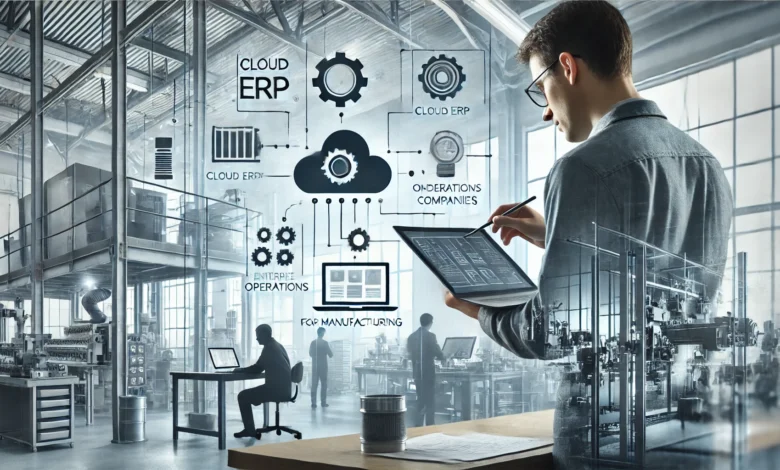
Cloud ERP (Enterprise Resource Planning) for manufacturing companies refers to modern, cloud-hosted software systems that integrate key business processes — including production planning, inventory, procurement, quality control, finance, and supply chain operations — into one unified platform. Unlike traditional on-premises ERP, cloud ERP runs on remote servers maintained by a vendor, giving manufacturers real-time visibility, scalability, and greater flexibility as they manage complex operations. In this guide, we explain what cloud ERP is, why manufacturing companies are adopting it, and how it can improve efficiency, reduce costs, and drive growth.
What Is Cloud ERP?
Cloud ERP is a type of enterprise software delivered over the internet. It centralizes business functions in a shared system that stakeholders can access through browsers or apps — usually with subscription-based pricing rather than large upfront licensing fees.
For manufacturers, this means one system can handle everything from shop-floor scheduling and inventory tracking to accounting and customer orders. Cloud ERP breaks down silos between departments, reduces duplication, and gives decision-makers real-time data to act faster and smarter.
Unlike traditional ERP, which is installed and hosted on local servers, cloud ERP is maintained by the provider. Updates, security, backups, and infrastructure scaling are handled externally, freeing internal IT teams to focus on core business needs.
Why Manufacturing Companies Are Switching to Cloud ERP
Manufacturing environments are more dynamic than ever. Global supply chains, fluctuating demand, mixed workforces, and remote data access are now everyday realities. Traditional ERPs — often inflexible and costly to update — struggle to keep up.
Cloud ERP delivers constant innovation, scalable performance, and seamless integration across systems. Instead of waiting months for upgrades, manufacturers receive new features automatically. Instead of high capital expenditure on hardware and IT staffing, cloud ERP uses operating expenses tied to actual usage.
This agility is why many manufacturing companies are switching. Cloud ERP helps reduce waste, improve responsiveness, and support digital transformation without the limitations of legacy systems.
Key Benefits of Cloud ERP for Manufacturing
Real-Time Visibility and Decision-Making
Cloud ERP gives managers up-to-the-minute data on production status, inventory levels, and customer orders. This transparency makes it easier to forecast demand, avoid stockouts, and optimize production schedules.
Scalability and Flexibility
Manufacturers can scale cloud ERP up or down based on needs. Whether expanding into new markets or adjusting resources during slower periods, cloud systems adapt without costly infrastructure changes.
Lower IT Costs
Cloud ERP reduces the need for on-site servers, maintenance staff, and upgrades. Subscription pricing often includes support, security, and regular updates — lowering total cost of ownership over time.
Improved Collaboration
Teams across locations — from production floors to sales offices — can access the same data and workflows. This reduces errors, speeds processes, and aligns goals across departments.
Faster Implementation
Cloud ERP systems often deploy faster than traditional ERP due to pre-built templates, minimal hardware setup, and vendor support. This allows manufacturers to realize value sooner.
Real-World Use Cases
Inventory Optimization: A mid-sized manufacturer uses cloud ERP dashboards to track inventory in real time, reducing excess stock while ensuring critical components are always available.
Production Scheduling: Cloud ERP helps balance machine capacity, labor availability, and order priorities to minimize bottlenecks and overtime costs.
Quality Control: By capturing inspection data in the cloud, quality teams can detect trends and prevent defective products before they leave the factory.
Supply Chain Coordination: Cloud ERP synchronizes with supplier systems so lead times, deliveries, and forecasts are aligned, reducing delays and supply disruptions.
Core Features of Cloud ERP for Manufacturers
Production Planning & Scheduling: Tools to plan jobs, sequence operations, and allocate resources efficiently.
Inventory & Warehouse Management: Real-time stock tracking, automated reorder alerts, and warehouse workflows.
Procurement & Supplier Management: Purchase orders, supplier performance tracking, and cost control.
Financial Management: General ledger, accounts payable/receivable, and financial reporting integrated with operational data.
Quality Management: Inspection plans, audit trails, corrective actions, and compliance reporting.
Reporting & Analytics: Dashboards, KPIs, and predictive insights based on real-time data streams.
Cloud ERP Deployment Models
Public Cloud: Shared infrastructure hosted by the ERP vendor. Cost-effective and easy to scale.
Private Cloud: Dedicated hosting environment that offers greater control and may be required for sensitive data or compliance needs.
Hybrid Cloud: Combines public and private cloud elements to balance security and cost.
The choice depends on data sensitivity, budget, compliance obligations, and long-term IT strategy.
Cost Considerations
Cloud ERP typically uses subscription pricing (monthly or annual), which includes software licensing, hosting, and support. Costs vary based on:
Number of Users: More users generally mean higher subscription fees.
Modules Selected: Each functional area (inventory, finance, quality, etc.) may be priced separately.
Customization and Integration: Tailoring the system or connecting with existing software can add to costs.
Training and Change Management: Onboarding teams and shifting processes require time and resources.
Despite these expenses, cloud ERP often results in lower total cost of ownership over time compared to on-premises ERP due to reduced hardware and maintenance costs.
Pros and Cons of Cloud ERP for Manufacturing
Pros:
• Real-time visibility into operations.
• Lower upfront IT costs and predictable OPEX model.
• Rapid deployment and automatic updates.
• Improved data accuracy and collaboration.
• Scalable with business growth.
Cons:
• Recurring subscription costs that may exceed long-term on-premises licensing for some organizations.
• Dependence on internet connectivity and vendor performance.
• Potential customization limitations compared to heavily tailored on-premises systems.
• Data security and compliance responsibilities shared with the cloud vendor.
How to Choose the Right Cloud ERP for Your Manufacturing Company
Assess Your Business Needs: Identify pain points and priorities such as inventory visibility, financial integration, or quality compliance.
Scalability and Growth Plans: Choose a system that supports future expansion and additional modules as needs evolve.
Vendor Reliability: Look for providers with a strong track record in manufacturing and cloud operations.
Integration Capabilities: Ensure the ERP can connect with other systems like CRM, PLM, or MES.
Security and Compliance: Evaluate how vendors protect data, support compliance standards, and manage backups.
User Experience: Choose an intuitive system that reduces training time and encourages user adoption.
Cloud ERP vs Traditional ERP for Manufacturing
| Feature | Traditional On-Premises ERP | Cloud ERP |
|---|---|---|
| Deployment | On company servers | Hosted by vendor |
| Cost Structure | High upfront, variable maintenance | Subscription-based, predictable |
| Scalability | Limited by hardware | Highly scalable |
| Updates | Manual, infrequent | Automatic, continuous |
| IT Burden | High | Lower |
Frequently Asked Questions (FAQ)
Is cloud ERP secure?
Yes. Leading cloud ERP providers invest heavily in security measures like encryption, multi-factor authentication, and monitoring. However, manufacturers must still enforce internal access controls and follow best practices.
Can cloud ERP work for small manufacturers?
Absolutely. Cloud ERP scales with business size, and subscription pricing models make it accessible for small and mid-sized manufacturers.
How long does a cloud ERP implementation take?
Deployment timelines vary but are generally shorter than traditional ERP — often a few months instead of a year or more, depending on complexity and customization needs.
What happens to my data if I switch ERP vendors?
Most cloud ERP systems offer data export tools to help migrate information to new platforms. It’s important to plan migrations carefully to preserve historical data and continuity.
Conclusion
Cloud ERP is transforming how manufacturing companies operate by delivering real-time visibility, operational agility, and lower IT overhead. It supports modern business needs such as remote work, global supply chains, and rapid response to market changes.
Although adoption requires investment and planning, the long-term benefits — improved efficiency, data-driven decision-making, and scalability — make cloud ERP a strategic advantage. For manufacturers focused on growth and resilience, embracing cloud ERP is not just a technology upgrade — it’s a competitive necessity.