AI in manufacturing operations refers to the use of artificial intelligence technologies to optimize, automate, and improve how factories run on a daily basis. From predicting machine failures to optimizing production schedules and improving quality control, AI is transforming manufacturing from a reactive, manual-driven environment into a data-driven, intelligent operation. In the first paragraph, it is important to be clear: AI is not about replacing factories or people overnight. It is about augmenting decision-making, reducing inefficiencies, and enabling manufacturers to operate smarter, faster, and more resiliently.
What Does AI Mean in a Manufacturing Context?
In manufacturing, AI refers to systems that can analyze large volumes of data, recognize patterns, learn from historical outcomes, and make recommendations or automated decisions.
AI technologies commonly used in manufacturing include machine learning, computer vision, natural language processing, predictive analytics, and optimization algorithms.
These technologies are embedded into manufacturing software, equipment, and platforms such as MES, ERP, SCADA, and industrial IoT systems.
The goal is not just automation, but continuous improvement based on real operational data.
Why AI Is Becoming Essential in Manufacturing Operations
Manufacturing environments are becoming more complex. Product lifecycles are shorter, supply chains are less predictable, and customer expectations for quality and speed are higher.
Traditional rule-based systems struggle to handle this complexity.
AI excels in environments with variability and large data sets. It helps manufacturers detect issues earlier, adapt to change faster, and make better decisions with less manual intervention.
As data from machines, sensors, and systems grows, AI becomes the tool that turns raw data into operational intelligence.
Key Applications of AI in Manufacturing Operations
Predictive Maintenance
Predictive maintenance is one of the most mature and impactful AI use cases in manufacturing.
AI models analyze machine sensor data, historical failures, vibration patterns, temperature changes, and usage cycles to predict when equipment is likely to fail.
This allows maintenance to be scheduled before breakdowns occur, reducing unplanned downtime and extending equipment life.
Quality Inspection and Defect Detection
AI-powered computer vision systems inspect products in real time using cameras and image analysis.
These systems can detect defects, inconsistencies, and deviations that human inspectors might miss.
AI improves consistency, reduces scrap, and supports higher quality standards without slowing production.
Production Planning and Scheduling
AI enhances production planning by analyzing demand forecasts, capacity constraints, material availability, and historical performance.
Unlike static schedules, AI-driven planning adapts dynamically to disruptions such as machine downtime, labor shortages, or supply delays.
This results in more realistic schedules and improved on-time delivery.
Process Optimization
AI models analyze process data to identify optimal operating parameters.
They can recommend adjustments to temperature, speed, pressure, or sequencing to maximize yield and reduce waste.
Over time, AI learns which conditions produce the best outcomes.
Demand Forecasting
AI improves demand forecasting by incorporating more variables than traditional models.
It can analyze historical sales, seasonality, market signals, and external factors to generate more accurate forecasts.
Better forecasts reduce inventory costs and improve customer service.
Energy Management
AI helps manufacturers monitor and optimize energy consumption.
By analyzing usage patterns, AI can identify inefficiencies, recommend load balancing, and reduce energy costs.
This also supports sustainability and environmental goals.
How AI Integrates into Manufacturing Systems
AI rarely operates as a standalone system.
It is typically embedded within existing manufacturing software or connected through data platforms.
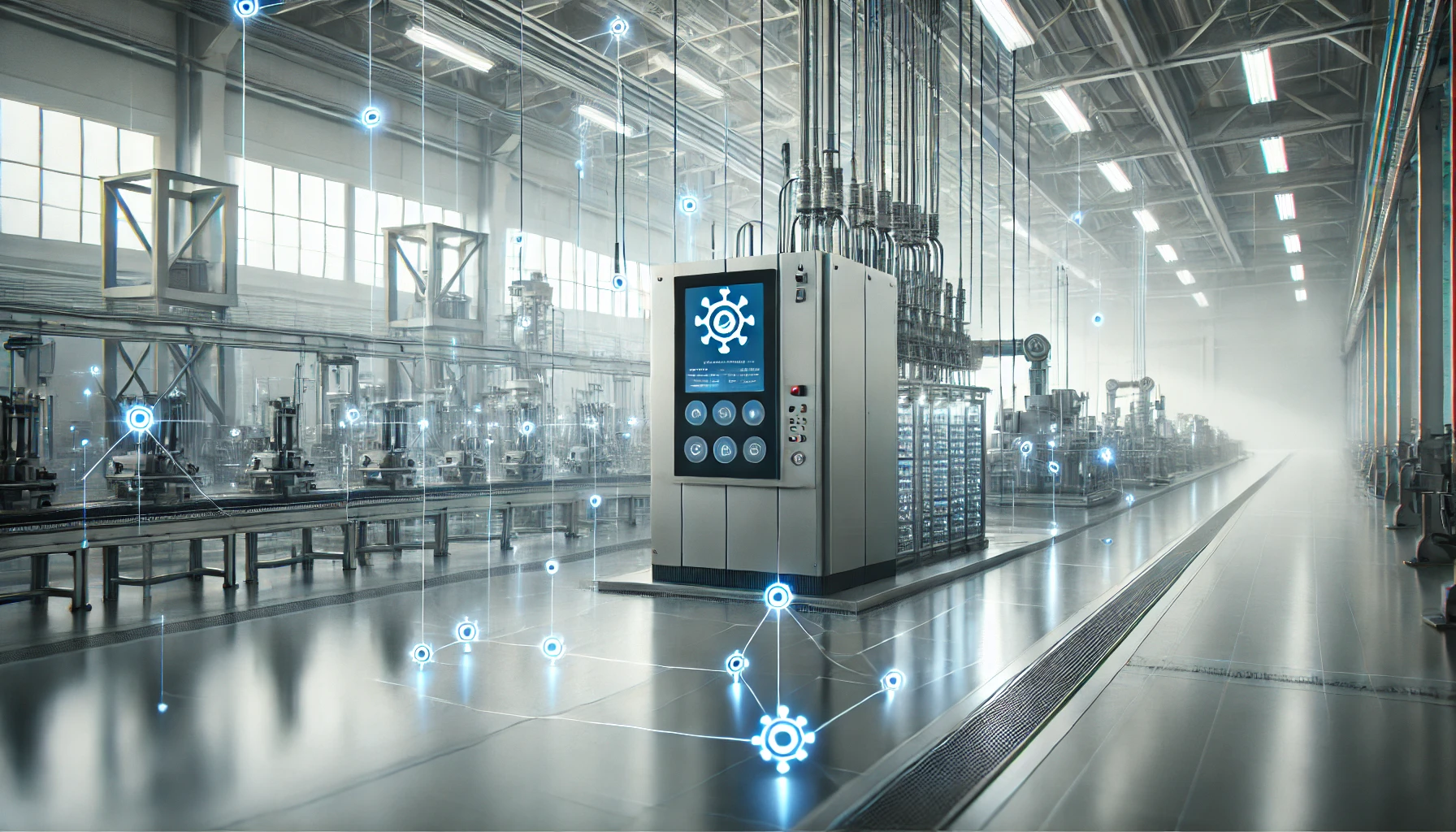
AI consumes data from PLCs, sensors, MES, ERP, and quality systems.
Insights and recommendations are then fed back to operators, planners, or automated control systems.
Successful AI adoption depends heavily on data integration and system connectivity.
Benefits of AI in Manufacturing Operations
Reduced downtime through predictive maintenance.
Improved product quality and consistency.
Higher equipment utilization and throughput.
Faster and more accurate decision-making.
Lower operational costs and waste.
Greater resilience to disruptions.
Real-World Manufacturing Use Cases
An automotive manufacturer uses AI vision systems to detect micro-defects in painted surfaces.
A food manufacturer applies AI to predict equipment sanitation needs and avoid contamination risks.
An electronics factory uses AI-driven scheduling to adapt production in real time based on component availability.
These examples show how AI delivers tangible operational value.
Cost and Investment Considerations
AI implementation costs vary widely depending on scope, data readiness, and integration complexity.
Costs may include sensors, data infrastructure, software licenses, integration, and training.
However, many AI projects deliver fast ROI by reducing downtime, scrap, and inefficiencies.
Manufacturers often start with targeted pilot projects before scaling.
Challenges and Limitations of AI in Manufacturing
AI depends on high-quality data. Poor data limits effectiveness.
Legacy equipment may lack sensors or connectivity.
Change management and workforce adoption can be challenging.
AI models require ongoing monitoring and refinement.
Cybersecurity risks increase as systems become more connected.
AI vs Traditional Automation
| Aspect | Traditional Automation | AI-Driven Operations |
|---|---|---|
| Decision Logic | Rule-based | Data-driven and adaptive |
| Flexibility | Low | High |
| Learning Capability | None | Continuous learning |
| Response to Change | Manual | Automatic or assisted |
Workforce Impact of AI in Manufacturing
AI does not eliminate the need for skilled workers.
Instead, it shifts roles from manual monitoring to higher-value tasks such as analysis, supervision, and problem-solving.
Successful manufacturers invest in training to help employees work effectively with AI tools.
Human expertise remains essential for oversight, judgment, and continuous improvement.
How to Start Using AI in Manufacturing Operations
Identify high-impact problems such as downtime, quality issues, or planning inefficiencies.
Assess data availability and quality.
Start with a focused pilot project.
Integrate AI with existing systems rather than replacing everything.
Measure results and scale gradually.
Frequently Asked Questions
Is AI only for large manufacturers?
No. Small and mid-sized manufacturers can also benefit from targeted AI solutions.
Does AI replace human decision-making?
No. AI supports and enhances human decisions.
How long does AI implementation take?
Pilot projects can deliver results in months, while full-scale adoption takes longer.
Is AI risky to implement?
Risks exist, but they are manageable with proper planning and governance.
Conclusion: The Role of AI in Manufacturing Operations
AI in manufacturing operations is no longer a future concept—it is a present-day competitive advantage.
By turning data into actionable insight, AI helps manufacturers improve reliability, efficiency, and quality.
While challenges exist, the benefits of well-implemented AI far outweigh the risks.
Manufacturers that adopt AI thoughtfully, align it with real operational needs, and invest in people as well as technology will be best positioned to thrive in the next era of industrial innovation.