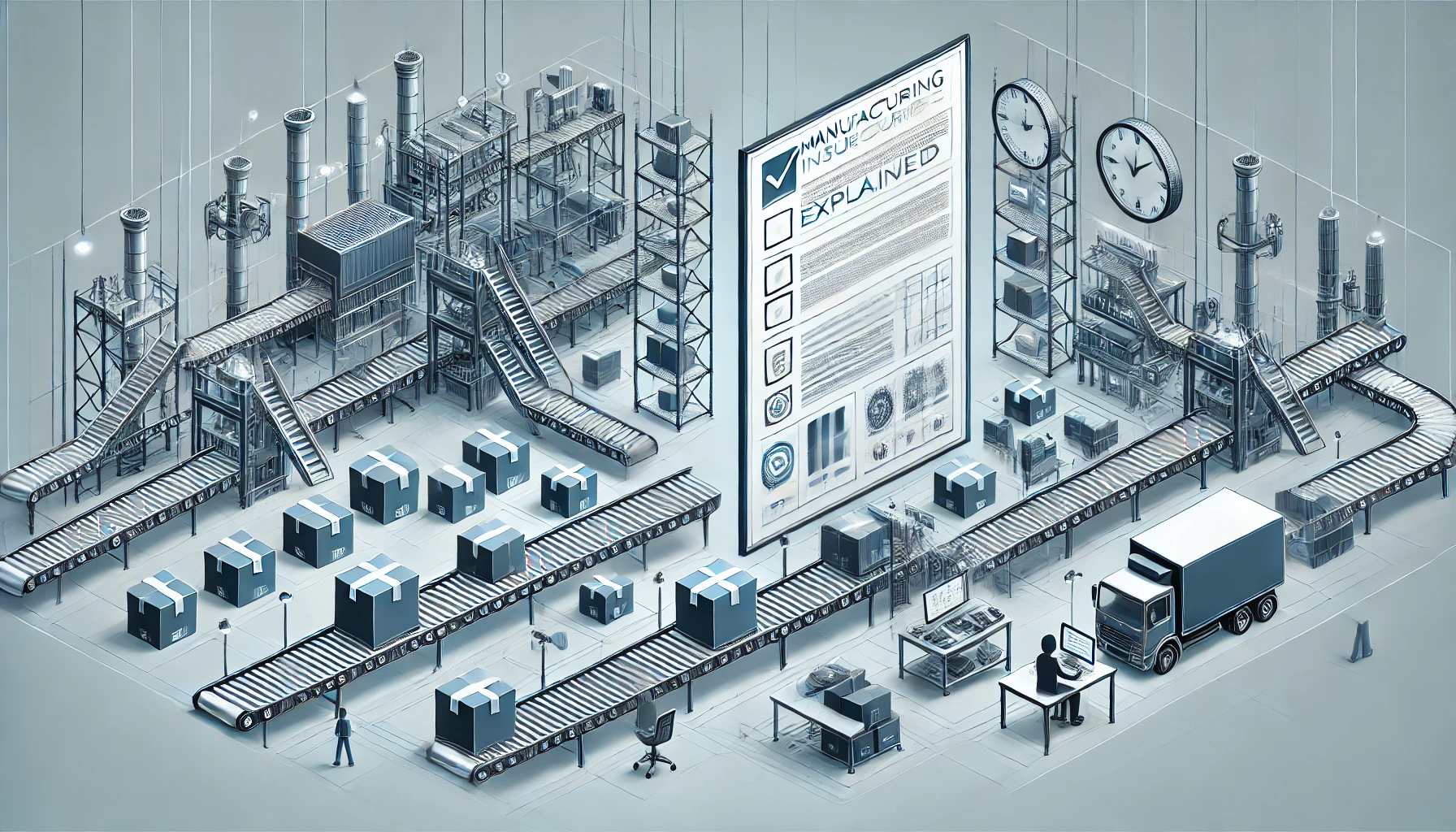
Manufacturing insurance coverage refers to the combination of insurance policies designed to protect manufacturing businesses from the wide range of risks they face in daily operations. In the first paragraph, it is essential to understand that manufacturing is inherently complex and risk-intensive. Factories deal with machinery, employees, raw materials, finished products, logistics, and regulatory requirements. Manufacturing insurance exists to safeguard these operations against financial loss, legal claims, accidents, and unexpected disruptions that could otherwise threaten business survival.
What Is Manufacturing Insurance?
Manufacturing insurance is not a single policy. It is a tailored set of coverages that work together to protect different aspects of a manufacturing business.
These policies address risks such as workplace injuries, property damage, equipment failure, product defects, supply chain disruptions, and legal liability.
The goal of manufacturing insurance is to transfer a portion of these risks from the manufacturer to an insurance provider, allowing the business to operate with greater stability and confidence.
Why Manufacturing Businesses Need Specialized Insurance
Manufacturing risks differ significantly from those of offices, retailers, or service businesses.
Factories operate heavy machinery, store hazardous materials, and employ workers in physically demanding environments.
Manufacturers are also legally responsible for the safety and performance of the products they release into the market.
Standard business insurance is often insufficient. Specialized manufacturing insurance coverage is designed to reflect the operational, legal, and financial realities of industrial production.
Core Types of Manufacturing Insurance Coverage
General Liability Insurance
General liability insurance covers third-party bodily injury, property damage, and personal injury claims.
For manufacturers, this may include visitors injured at the facility or damage caused during business operations.
It is often the foundational policy required by customers, landlords, and partners.
Product Liability Insurance
Product liability insurance protects manufacturers from claims that their products caused injury or property damage.
This coverage applies after products leave the factory and enter the supply chain.
Given the potential scale of product-related claims, this is one of the most critical coverages for manufacturers.
Workers’ Compensation Insurance
Workers’ compensation provides medical benefits and wage replacement for employees injured on the job.
Manufacturing environments carry higher injury risk due to machinery, noise, and manual handling.
Workers’ compensation is legally required in most jurisdictions and is essential for protecting both employees and employers.
Commercial Property Insurance
Commercial property insurance covers physical assets such as buildings, machinery, equipment, inventory, and raw materials.
This coverage protects against losses from fire, theft, vandalism, and certain natural disasters.
For capital-intensive manufacturers, property insurance is vital to recovery after major incidents.
Equipment Breakdown Insurance
Equipment breakdown insurance covers sudden and accidental failure of machinery and production equipment.
This may include electrical failures, mechanical breakdowns, or pressure system failures.
Unlike standard property insurance, this coverage addresses internal mechanical or electrical damage.
Business Interruption Insurance
Business interruption insurance compensates for lost income when operations are halted due to a covered event.
This coverage helps manufacturers continue paying fixed expenses while recovering from disruptions.
It is often bundled with property or equipment breakdown policies.
Commercial Auto Insurance
Manufacturers that operate company-owned vehicles require commercial auto insurance.
This coverage applies to delivery trucks, service vehicles, and other business-use transportation.
It protects against liability and physical damage related to vehicle use.
Cyber Liability Insurance
As manufacturing becomes more digital, cyber liability insurance has grown in importance.
This coverage addresses data breaches, ransomware attacks, and operational disruption caused by cyber incidents.
It is especially relevant for manufacturers using ERP, MES, IoT, and connected production systems.
Optional and Specialized Manufacturing Coverages
Depending on industry and risk profile, manufacturers may also need pollution liability, recall insurance, export insurance, or professional liability coverage.
Highly regulated industries such as food, pharmaceuticals, chemicals, and automotive manufacturing often require additional specialized policies.
Insurance programs should be customized rather than standardized.
Real-World Manufacturing Insurance Scenarios
A fire damages a production line, and property insurance covers equipment replacement.
A defective component causes injury, triggering product liability coverage.
An employee is injured during machine maintenance, and workers’ compensation applies.
A ransomware attack halts operations, and cyber insurance supports recovery and response costs.
These scenarios illustrate how different policies work together in practice.
Cost Factors for Manufacturing Insurance
Manufacturing insurance costs vary widely.
Key factors include industry type, annual revenue, number of employees, claims history, safety practices, equipment value, and geographic location.
High-risk industries and complex operations typically face higher premiums.
However, strong safety programs, quality controls, and risk management can significantly reduce insurance costs over time.
Benefits of Comprehensive Manufacturing Insurance Coverage
Financial protection against major losses.
Regulatory and contractual compliance.
Business continuity during unexpected events.
Improved credibility with customers and partners.
Support for long-term growth and investment.
Common Coverage Gaps and Mistakes
Underestimating product liability exposure.
Insufficient coverage limits for large-scale losses.
Ignoring cyber risks in connected factories.
Failing to update coverage as operations expand.
Relying on generic policies not designed for manufacturing.
Manufacturing Insurance Coverage vs Basic Business Insurance
| Aspect | Basic Business Insurance | Manufacturing Insurance |
|---|---|---|
| Risk Coverage | Limited | Comprehensive |
| Product Liability | Often excluded | Core coverage |
| Equipment Risk | Minimal | Specialized |
| Operational Fit | Generic | Industry-specific |
How to Choose the Right Manufacturing Insurance Program
Identify your key operational risks.
Review legal and customer insurance requirements.
Work with brokers or insurers experienced in manufacturing.
Ensure coverage limits align with worst-case scenarios.
Review exclusions and endorsements carefully.
Reassess coverage annually or when operations change.
Frequently Asked Questions
Is manufacturing insurance legally required?
Some coverages, such as workers’ compensation, are legally required, while others are strongly recommended.
Can small manufacturers afford comprehensive insurance?
Yes. Policies can be scaled to business size and risk profile.
Does insurance replace safety and quality programs?
No. Insurance complements strong operational controls but does not replace them.
How often should manufacturing insurance be reviewed?
At least annually and whenever major operational changes occur.
Conclusion: Understanding Manufacturing Insurance Coverage
Manufacturing insurance coverage is a critical foundation for operating in a high-risk, high-responsibility environment.
By combining multiple specialized policies, manufacturers protect their people, property, products, and financial stability.
Well-designed insurance coverage does more than transfer risk—it enables resilience, compliance, and sustainable growth.
For manufacturers of any size, understanding and investing in the right insurance coverage is not optional; it is essential for long-term success.