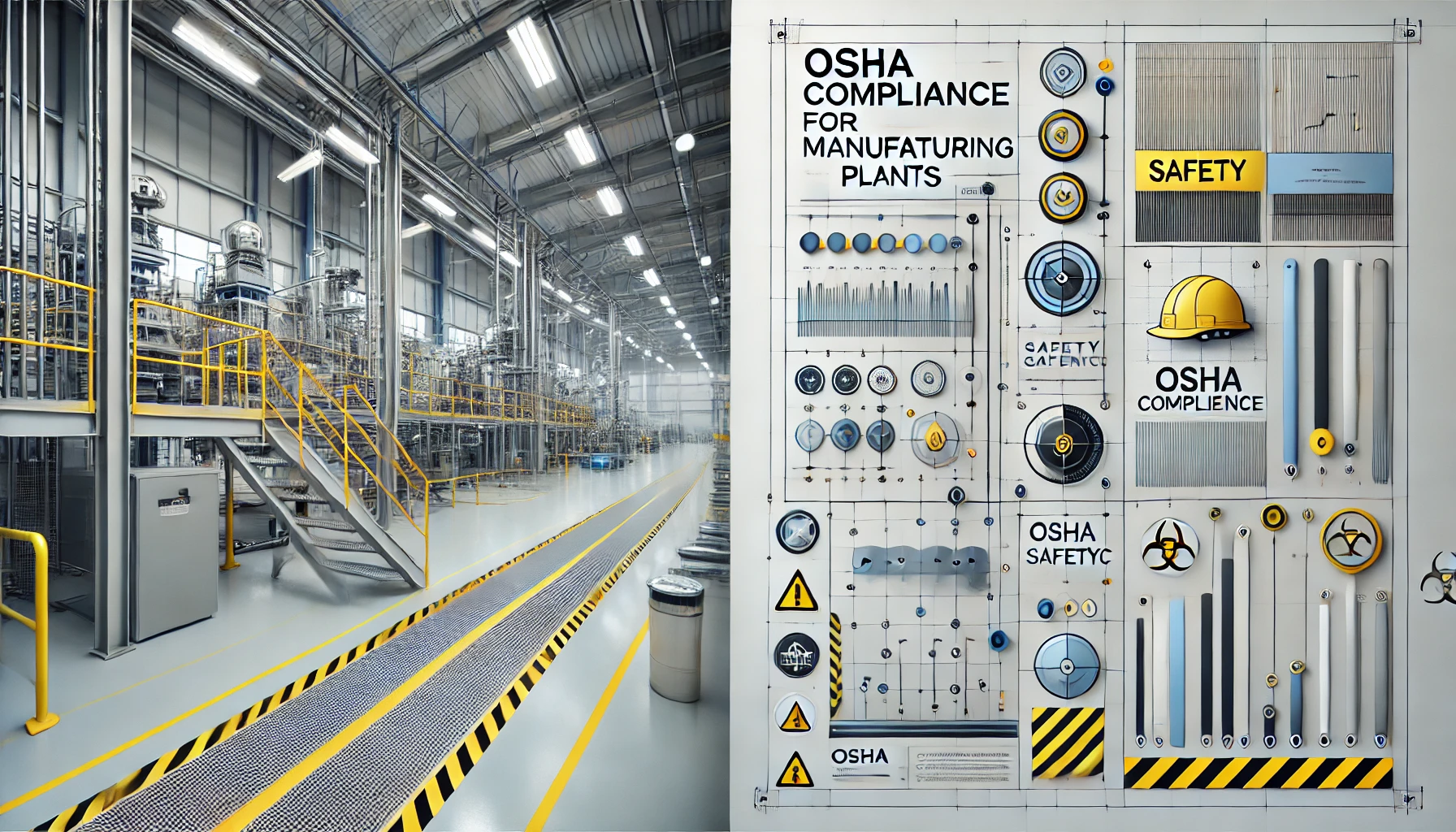
OSHA compliance for manufacturing plants refers to meeting the workplace safety and health requirements enforced by the Occupational Safety and Health Administration (OSHA). In the first paragraph, it’s important to clearly understand that OSHA compliance is not just about passing inspections or avoiding fines. For manufacturing plants, OSHA compliance is about protecting workers from injury and illness, maintaining uninterrupted operations, and building a culture where safety is treated as a core business priority rather than an afterthought.
What Is OSHA and Why It Matters to Manufacturers
OSHA is a U.S. federal agency responsible for ensuring safe and healthy working conditions. It sets and enforces standards, provides training and guidance, and conducts workplace inspections.
Manufacturing plants are among the most heavily regulated workplaces under OSHA because they involve machinery, hazardous materials, noise, energy sources, and physically demanding tasks.
OSHA compliance matters because manufacturing injuries can be severe, costly, and preventable. Strong compliance reduces accidents, limits legal exposure, and supports long-term operational stability.
Who Must Comply with OSHA Regulations?
Most private-sector manufacturing plants in the United States must comply with OSHA regulations.
This includes large factories, small manufacturing shops, contract manufacturers, and facilities with temporary or seasonal workers.
Even employers with only a few employees are subject to OSHA rules, although reporting and documentation requirements may vary based on company size.
Core OSHA Standards Affecting Manufacturing Plants
General Industry Standards
Most manufacturing plants fall under OSHA’s General Industry standards.
These standards cover a wide range of topics including machine guarding, electrical safety, hazardous materials, walking and working surfaces, and personal protective equipment.
Compliance requires both physical controls and documented procedures.
Machine Guarding
Machine guarding is one of the most cited OSHA violations in manufacturing.
Moving parts such as gears, belts, blades, and rotating shafts must be properly guarded to prevent contact.
Guards must be securely installed, maintained, and never bypassed.
Lockout/Tagout (Control of Hazardous Energy)
Lockout/tagout rules protect workers during equipment maintenance and servicing.
Manufacturers must ensure machines are properly shut down, isolated from energy sources, and locked before work begins.
Written procedures, employee training, and periodic inspections are required.
Hazard Communication
Manufacturing plants often use chemicals that pose health risks.
OSHA’s Hazard Communication standard requires proper labeling, safety data sheets, and employee training.
Workers must understand the hazards they are exposed to and how to protect themselves.
Personal Protective Equipment (PPE)
Employers must assess workplace hazards and provide appropriate PPE such as gloves, eye protection, hearing protection, helmets, and respirators.
Training is required to ensure employees know when and how to use PPE correctly.
Noise Exposure
Many manufacturing environments exceed safe noise levels.
OSHA requires monitoring, hearing conservation programs, and protective equipment when noise exposure exceeds limits.
OSHA Recordkeeping and Reporting Requirements
Manufacturing plants must record work-related injuries and illnesses using OSHA logs.
Certain incidents, such as fatalities or serious injuries, must be reported to OSHA within specific timeframes.
Accurate recordkeeping demonstrates compliance and helps identify safety trends.
Failure to maintain proper records can result in citations even if no accidents occur.
OSHA Inspections: What to Expect
OSHA inspections may be triggered by accidents, employee complaints, or routine enforcement programs.
Inspections typically involve an opening conference, facility walkthrough, document review, and closing conference.
Inspectors may interview employees, examine equipment, and review safety records.
Being prepared for inspections reduces disruption and risk.
Common OSHA Violations in Manufacturing
Missing or inadequate machine guards.
Failure to follow lockout/tagout procedures.
Inadequate hazard communication or chemical labeling.
Lack of PPE or improper PPE use.
Poor housekeeping and blocked exits.
Insufficient employee safety training.
Cost of OSHA Non-Compliance
OSHA violations can result in significant fines, especially for serious or repeat violations.
Beyond fines, non-compliance leads to indirect costs such as medical expenses, workers’ compensation claims, lost productivity, legal fees, and damaged reputation.
Production shutdowns or restricted operations may be required until hazards are corrected.
In severe cases, criminal penalties may apply.
Benefits of Strong OSHA Compliance
Reduced workplace injuries and illnesses.
Lower workers’ compensation and insurance costs.
Improved employee morale and retention.
Higher productivity due to fewer disruptions.
Stronger reputation with customers, regulators, and employees.
OSHA Compliance vs Reactive Safety Management
| Aspect | Reactive Safety | Proactive OSHA Compliance |
|---|---|---|
| Accident Prevention | After incidents occur | Before incidents happen |
| Cost Control | High and unpredictable | Lower and controlled |
| Employee Engagement | Low | High |
| Regulatory Risk | High | Managed |
How Manufacturing Plants Can Achieve OSHA Compliance
Identify all applicable OSHA standards for your operations.
Conduct regular hazard assessments and safety audits.
Develop clear safety procedures and ensure they reflect actual practices.
Train employees regularly and document training.
Maintain equipment and safety devices properly.
Encourage employees to report hazards and near-misses.
Review incidents and corrective actions to prevent recurrence.
Role of Safety Culture in OSHA Compliance
OSHA compliance is not achieved through policies alone.
A strong safety culture ensures that rules are followed even when no one is watching.
Leadership commitment, open communication, and employee involvement are essential.
Plants with strong safety cultures often exceed minimum compliance requirements.
Frequently Asked Questions About OSHA Compliance
Is OSHA compliance mandatory for manufacturing plants?
Yes. Most manufacturing plants are legally required to comply with OSHA standards.
Can OSHA shut down a manufacturing plant?
Yes. OSHA can require operations to stop if there is an imminent danger to workers.
How often should OSHA training be conducted?
Training should occur during onboarding and be refreshed regularly or when processes change.
Do small manufacturing plants need OSHA programs?
Yes. While requirements may vary, safety obligations apply regardless of size.
Conclusion: OSHA Compliance as a Manufacturing Priority
OSHA compliance for manufacturing plants is about more than meeting regulatory requirements. It is about protecting workers, ensuring operational continuity, and managing risk responsibly.
Manufacturers that invest in OSHA compliance reduce accidents, control costs, and create safer, more productive workplaces.
By integrating OSHA standards into daily operations and building a strong safety culture, manufacturing plants can move beyond compliance and achieve long-term operational excellence.