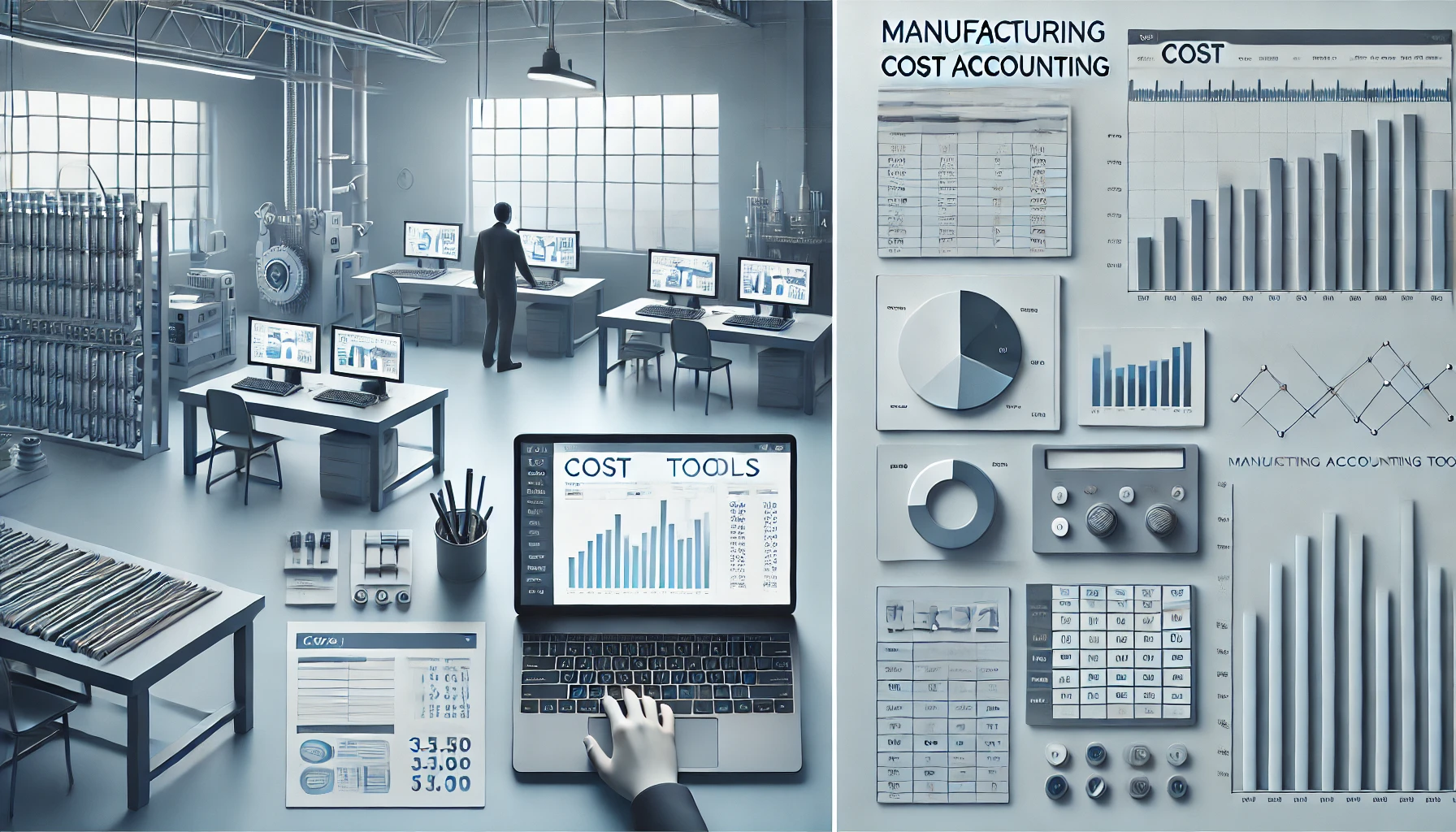
Manufacturing cost accounting tools are software systems and methodologies used to track, analyze, and manage the costs associated with producing goods. These tools help manufacturers understand where money is being spent—on materials, labor, overhead, and inefficiencies—and provide insights that inform pricing, budgeting, product mix decisions, and profitability strategies. In the first paragraph it’s important to understand that accurate cost accounting is not just about financial reporting; it’s about giving manufacturers real-time visibility into cost drivers so they can make smarter operational and strategic choices.
What Are Manufacturing Cost Accounting Tools?
Manufacturing cost accounting tools are systems (often software) that collect data from production activities, financial systems, and operational processes to calculate product and process costs. These tools apply cost accounting methodologies such as standard costing, activity-based costing (ABC), job costing, and variance analysis to assign costs accurately and consistently across products and departments.
Unlike general accounting systems that focus mainly on compliance and reporting, manufacturing cost accounting tools link financial data with operational activity data, giving manufacturers the ability to see how production decisions and process performance impact profitability.
Many of these tools integrate with other systems such as ERP (Enterprise Resource Planning), MES (Manufacturing Execution Systems), and inventory management platforms to ensure data flows automatically and accurately.
Why Cost Accounting Is Critical in Manufacturing
Manufacturing involves complex cost structures. Direct materials vary by batch, labor costs differ by process and skill level, and overhead can fluctuate based on machine utilization, energy usage, and facility expenses. Without effective tools to capture and analyze these costs, manufacturers risk pricing errors, low profitability, hidden inefficiencies, and poor investment decisions.
Cost accounting tools help manufacturers understand product profitability, calculate break-even points, determine the true cost of changeovers or scrap, and identify opportunities to reduce costs without compromising quality.
Key Cost Accounting Methodologies Used in Manufacturing
Standard Costing
Standard costing assigns predetermined costs to materials, labor, and overhead based on expected performance. Variances between actual and standard costs are tracked to highlight inefficiencies.
This methodology is useful for performance measurement and budgeting but requires regular updates to remain relevant with market and operational changes.
Activity-Based Costing (ABC)
ABC allocates overhead costs based on activities that drive costs, such as machine hours, inspection time, or setup frequency. This approach provides more accurate product cost information, especially in complex environments with significant overhead.
ABC helps identify cost drivers and supports detailed profitability analysis by product, customer, or process.
Job Costing
Job costing tracks costs for specific jobs, orders, or batches. It is commonly used in custom, project-based, or low-volume manufacturing where products differ significantly from one order to the next.
This methodology ties costs directly to unique manufacturing jobs to support accurate pricing and cost control.
Process Costing
Process costing averages costs across large volumes of uniform products. It is common in continuous or bulk manufacturing processes like chemical, food, or paper production.
Process costing simplifies cost allocation when product variation is minimal.
Core Features of Manufacturing Cost Accounting Tools
Automated Data Integration: Tools pull cost data from ERP, inventory, payroll, and production systems to avoid manual entry and errors.
Real-Time Cost Tracking: Accurate cost visibility as production happens, supporting on-the-fly decisions.
Variance Analysis: Identifies differences between actual and standard costs to highlight inefficiencies.
Cost Allocation Engines: Support multiple costing methodologies such as ABC, standard, job, and process costing.
Reporting and Dashboards: Visual cost reports, trend analyses, and profitability dashboards for managers and finance teams.
Scenario Planning: Allows “what if” modeling for changes in material costs, labor rates, or production mixes.
Audit Trails and Compliance: Detailed records that support financial audits and internal control requirements.
Benefits of Using Cost Accounting Tools in Manufacturing
Accurate Product Costing: Better pricing decisions based on real production costs rather than rough estimates.
Improved Profitability Insights: Visibility into which products, lines, or customers generate real profit.
Efficient Budgeting and Forecasting: Predict future costs more reliably with historical and real-time data.
Reduced Waste and Variance: Variance reports highlight inefficiencies, enabling corrective action.
Stronger Strategic Decisions: Scenario modeling helps leadership evaluate investments, pricing changes, and process improvements.
Real-World Use Cases
Cost Reduction Programs: A manufacturer uses variance analysis to identify that machine setup inefficiencies are driving higher labor costs, leading to targeted improvements and labor cost savings.
Product Line Rationalization: ABC reveals that a purportedly “high-volume” product consumes disproportionate support costs, prompting a pricing adjustment or discontinuation decision.
Custom Jobs Pricing: A job shop uses job costing tools to ensure custom quotes reflect true materials, labor, and overhead, protecting margin on bespoke orders.
Continuous Improvement Monitoring: Trend dashboards show that scrap rates have increased over time, prompting a quality improvement initiative with measurable cost savings.
Cost and Investment Considerations
The cost of cost accounting tools varies widely. Simple add-ons or modules within existing ERP systems may require minimal incremental investment. Advanced cost accounting platforms or standalone systems can involve licensing fees, integration services, training, and support costs.
Manufacturers should consider both direct costs (software, implementation, support) and indirect costs (process redesign, data governance, training) when evaluating solutions.
The ROI often comes through improved pricing accuracy, reduced waste, better margin protection, and more informed strategic decisions.
Pros and Cons of Manufacturing Cost Accounting Tools
Pros:
• Greater visibility into costs and profitability.
• Automated, real-time data reduces reliance on spreadsheets.
• Supports multiple costing methodologies for flexibility.
• Improves planning, pricing, budgeting, and operational decisions.
Cons:
• Implementation can be complex, especially with legacy systems.
• Requires discipline in data quality and governance.
• Upfront investment may be significant for standalone solutions.
Cost Accounting Tools vs Traditional Accounting Systems
| Feature | Traditional Accounting | Manufacturing Cost Accounting Tools |
|---|---|---|
| Focus | General financial reporting | Detailed product and process costing |
| Data Integration | Manual or limited | Automated and real-time |
| Visibility | High-level | Granular and actionable |
| Costing Methods | Basic | Multiple methodologies |
| Decision Support | Limited | Robust |
How to Choose the Right Cost Accounting Tool
Assess Current Pain Points: Identify whether cost visibility, pricing accuracy, or variance control is the top priority.
Integration Needs: Choose tools that integrate with your ERP, MES, inventory, and payroll systems to reduce data gaps.
Scalability: Ensure the solution grows with your business and supports future cost analysis needs.
User Experience: Strong dashboards and intuitive reporting help teams adopt and act on insights.
Methodology Support: Confirm the tool supports the costing methods your business needs (standard, ABC, job costing, etc.).
Vendor Support and Services: Evaluate training, implementation support, and ongoing service quality.
Frequently Asked Questions
Do manufacturing cost accounting tools replace my ERP?
No. These tools often complement ERP systems by adding deeper costing functionality that ERP alone may not fully provide.
Can small manufacturers benefit?
Yes. Even small and mid-size manufacturers gain value from better cost visibility and pricing decisions, especially when margins are tight.
Is real-time cost tracking necessary?
Most manufacturers benefit greatly from real-time cost tracking, as it enables faster responses to trends like rising material costs or labor variances.
Do these tools require specialized accountants?
While accountants benefit from cost accounting tools, modern systems are increasingly designed for use by operations, production, and financial teams alike—with appropriate training.
Conclusion: The Value of Cost Accounting Tools in Manufacturing
Manufacturing cost accounting tools provide the clarity and precision needed to understand what it truly costs to make products. By integrating financial, operational, and production data, these tools empower manufacturers to price products correctly, identify inefficiencies, and make strategic decisions that protect and grow margins.
Modern manufacturing demands real-time insights, competitive responsiveness, and disciplined cost management. Cost accounting tools—when selected and implemented thoughtfully—are a cornerstone of financial and operational excellence.