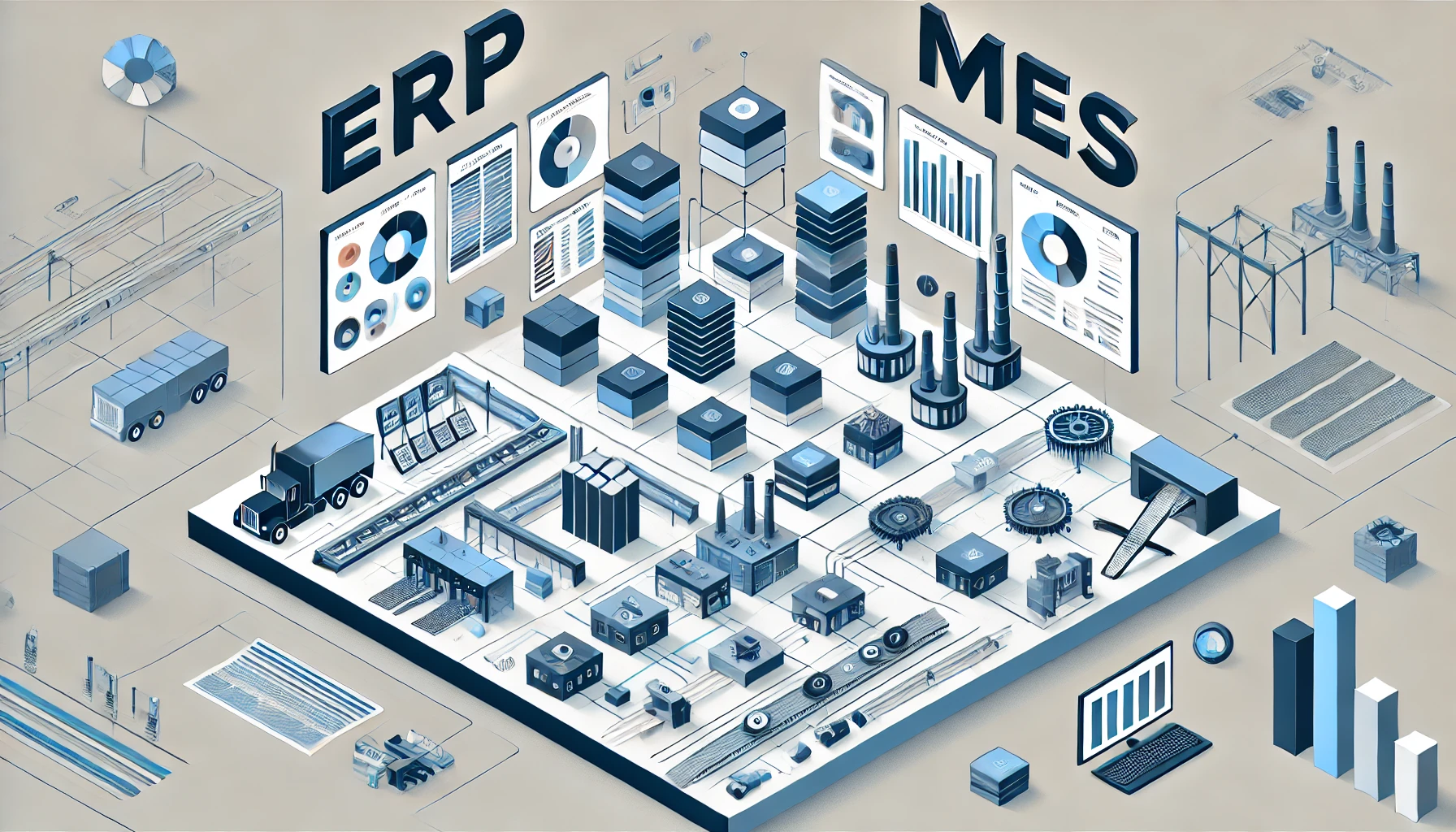
ERP vs MES for manufacturing is a common comparison manufacturers face when modernizing operations or investing in digital transformation. Both ERP (Enterprise Resource Planning) and MES (Manufacturing Execution Systems) play critical roles, but they serve very different purposes. In simple terms, ERP focuses on planning and managing the business as a whole, while MES focuses on controlling and optimizing what happens on the factory floor. Understanding the difference is essential to choosing the right system, avoiding costly mistakes, and getting real value from technology investments.
What Is ERP in Manufacturing?
ERP, or Enterprise Resource Planning, is a business-wide system designed to manage core organizational processes in a single integrated platform. In manufacturing, ERP typically handles functions such as finance, procurement, inventory management, sales orders, human resources, and high-level production planning.
An ERP system answers questions like what needs to be produced, when it should be produced, what materials are required, and how much it will cost. It focuses on long-term and mid-term planning rather than real-time execution.
ERP systems are often used by management, finance teams, planners, and supply chain professionals who need a consolidated view of the business.
What Is MES in Manufacturing?
MES, or Manufacturing Execution System, is designed to manage, monitor, and control production activities on the shop floor in real time. MES bridges the gap between planning systems like ERP and actual manufacturing equipment.
An MES system tracks what is being produced right now, which machines are running, which operators are working, and whether production is meeting quality and performance standards.
MES focuses on execution and visibility. It provides detailed, real-time information that helps supervisors and operators optimize production, reduce downtime, and ensure quality.
The Core Difference Between ERP and MES
The most important difference between ERP and MES is their scope and time horizon.
ERP looks at the business from a high level. It plans and coordinates resources across departments and over longer timeframes, such as weeks, months, or quarters.
MES looks at manufacturing operations minute by minute. It focuses on execution, monitoring, and control at the machine, line, or work-center level.
In short, ERP decides what should happen, and MES ensures it happens correctly on the factory floor.
Key Functions of ERP Systems
ERP systems manage demand forecasting, sales orders, and master production schedules.
They handle inventory planning, purchasing, supplier management, and cost control.
ERP systems also manage financial accounting, payroll, compliance reporting, and high-level performance metrics.
For manufacturers, ERP provides a single source of truth for business data and supports strategic decision-making.
Key Functions of MES Systems
MES systems manage real-time production tracking, including start and stop times, quantities produced, and scrap rates.
They support work instructions, operator guidance, and digital work orders.
MES systems collect machine data to monitor performance, downtime, and efficiency.
They also support quality checks, traceability, and compliance documentation directly on the shop floor.
How ERP and MES Work Together
ERP and MES are not competing systems. In most modern manufacturing environments, they work together.
The ERP system sends production orders, bills of materials, and schedules to the MES.
The MES executes those orders on the shop floor and sends back real-time data such as production progress, material consumption, labor hours, and quality results.
This integration creates a closed feedback loop where planning and execution are continuously aligned.
Use Cases for ERP in Manufacturing
ERP is ideal for managing multi-site operations, coordinating supply chains, and controlling costs.
Manufacturers use ERP to plan production based on customer demand and available resources.
ERP is essential for financial reporting, regulatory compliance, and long-term capacity planning.
Without ERP, manufacturers often struggle with disconnected systems and inconsistent data.
Use Cases for MES in Manufacturing
MES is essential for manufacturers who need real-time visibility into production.
It is especially valuable in environments with complex processes, frequent changeovers, or strict quality requirements.
MES supports lean manufacturing, continuous improvement, and Industry 4.0 initiatives.
Without MES, many manufacturers rely on manual data collection, spreadsheets, or delayed reporting.
Cost Considerations
ERP systems typically involve higher upfront and ongoing costs due to their broad scope and enterprise-wide impact.
MES systems may have lower licensing costs but require investment in shop-floor integration, hardware, and change management.
The real cost consideration is value. ERP delivers strategic and financial control, while MES delivers operational efficiency and real-time insight.
Many manufacturers see the highest return when both systems are properly integrated.
Pros and Cons of ERP for Manufacturing
Pros:
ERP provides a unified view of the business, improves planning accuracy, and supports financial and regulatory requirements.
Cons:
ERP lacks real-time shop-floor visibility and is not designed to manage detailed production execution.
Pros and Cons of MES for Manufacturing
Pros:
MES delivers real-time production visibility, improves quality control, and reduces downtime.
Cons:
MES does not replace enterprise-level planning or financial management and depends on integration with ERP.
ERP vs MES: Side-by-Side Comparison
| Aspect | ERP | MES |
|---|---|---|
| Primary Focus | Business planning and management | Shop-floor execution and control |
| Time Horizon | Days, weeks, months | Real-time, minutes, hours |
| Users | Management, planners, finance | Operators, supervisors, engineers |
| Data Granularity | High-level summaries | Detailed operational data |
| Core Value | Planning and coordination | Execution and optimization |
How to Decide Between ERP and MES
If your main challenge is poor planning, inventory issues, or lack of financial visibility, ERP should be the priority.
If your main challenge is downtime, quality problems, or lack of real-time production data, MES is likely the better starting point.
For many manufacturers, the best solution is not ERP or MES, but ERP and MES working together.
The decision should be based on current pain points, business maturity, and long-term digital strategy.
Frequently Asked Questions
Can MES replace ERP?
No. MES focuses on execution, while ERP manages enterprise-wide planning and finance.
Can ERP replace MES?
No. ERP systems are not designed for real-time shop-floor control.
Do small manufacturers need both ERP and MES?
Not always. Smaller manufacturers may start with ERP or a lightweight MES and expand as complexity grows.
Is integration between ERP and MES difficult?
Integration requires planning, but modern systems and standards make it increasingly manageable.
Conclusion: ERP vs MES for Manufacturing
ERP and MES serve different but complementary roles in manufacturing. ERP manages the business, while MES manages production execution.
Choosing between them without understanding their purpose can lead to frustration and wasted investment.
Manufacturers that align ERP for planning and MES for execution gain better visibility, control, and performance across their operations.
In today’s competitive manufacturing environment, understanding ERP vs MES is not just a technical decision—it is a strategic one.