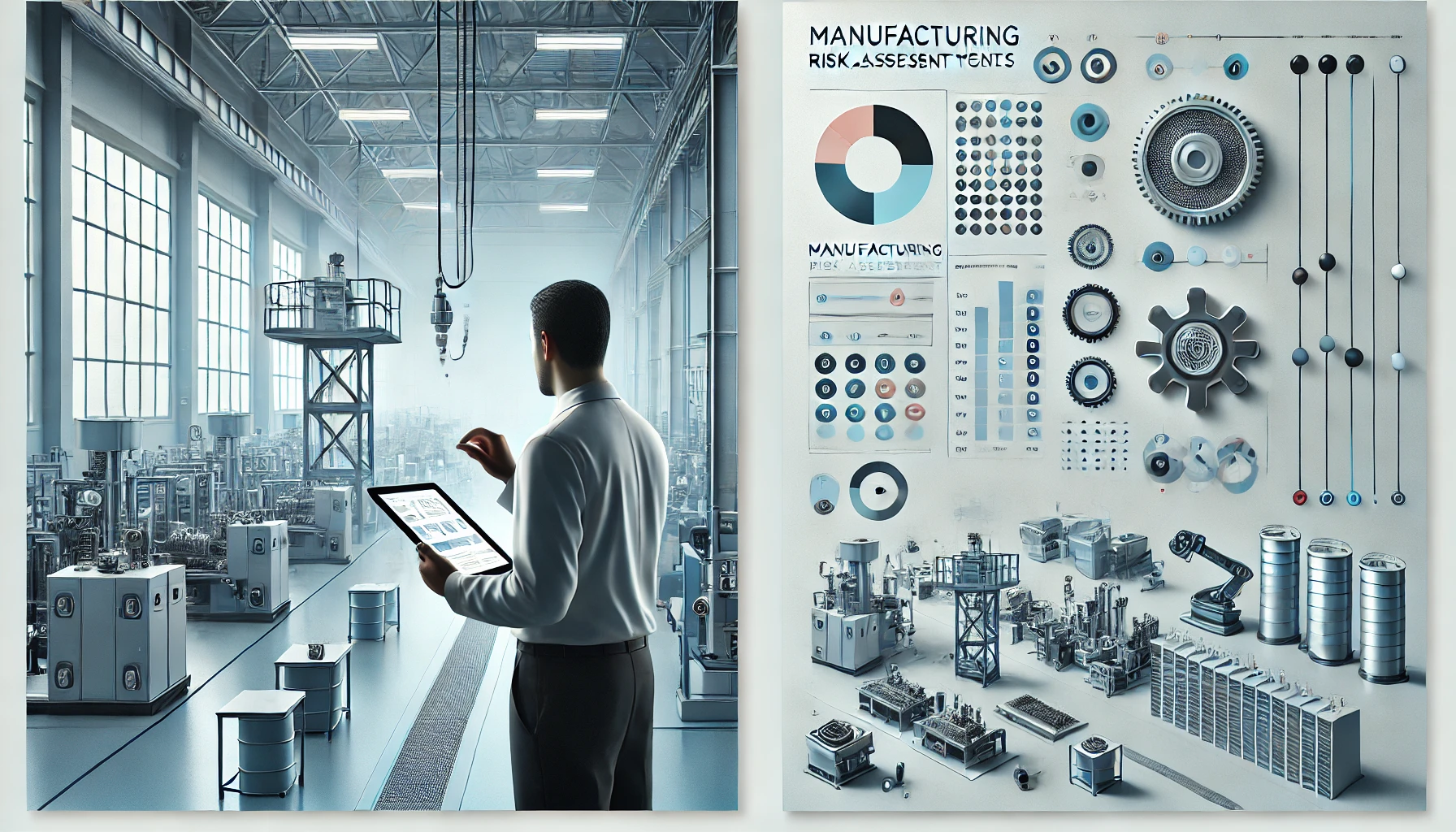
Manufacturing risk assessment tools are systems and methods used to identify, evaluate, and manage risks across production operations. These tools help manufacturers anticipate what might go wrong—from safety hazards and quality issues to supply chain disruptions or equipment failures—and put controls in place before problems escalate. In this first paragraph, it’s important to understand that risk assessment isn’t about eliminating all uncertainty; it’s about managing it in a structured way so businesses remain safe, compliant, productive, and competitive.
What Are Manufacturing Risk Assessment Tools?
Manufacturing risk assessment tools are frameworks, software platforms, checklists, analytic systems, or methodologies that help organizations systematically find and prioritize risks. These tools support everything from safety audits and hazard analysis to predictive maintenance and supply chain visibility.
The goal is to move from reactive problem-solving—responding after something breaks—to proactive risk management, where potential issues are identified early and mitigation strategies are deployed before losses occur.
By using these tools, manufacturers can quantify risk, plan controls, measure improvements, and document compliance with regulations or internal standards.
Why Risk Assessment Matters in Manufacturing
Manufacturing environments involve heavy machinery, hazardous materials, complex supply chains, and fast-moving processes. These conditions create risks ranging from worker injury and product defects to equipment breakdowns and regulatory non-compliance.
Manufacturing risk assessment tools help organizations understand what could go wrong, how likely it is to happen, and how severe the impact might be. This understanding enables data-driven decisions that protect people, assets, and profits.
Types of Manufacturing Risk Assessment Tools
Risk Matrices and Scorecards
Risk matrices allow teams to score the likelihood and impact of identified risks. By plotting risks on a grid, manufacturers can quickly see which issues demand immediate attention and which can be monitored over time.
Scorecards provide numeric ratings and trends, making it easier to compare risks across departments or time periods.
Hazard Identification Checklists (HAZID)
HAZID tools are structured checklists used to identify potential hazards across processes, equipment, or environments. These checklists help teams capture risks that might be overlooked during informal reviews.
They’re especially useful during design changes, new process introductions, or before audits.
Failure Modes and Effects Analysis (FMEA)
FMEA is a structured approach that examines potential failure points in a process or product, analyzes causes and effects, and prioritizes actions based on severity, occurrence, and detectability.
This tool is especially valuable for product design, process optimization, and quality improvement.
Fault Tree Analysis (FTA)
FTA is a top-down method that maps potential failures in a system using logical relationships. It helps manufacturers visualize root causes and the sequence of events that could lead to a critical failure.
This approach is often used in safety engineering and complex systems analysis.
Predictive Analytics and Machine Learning Tools
Advanced tools use real-time sensor data, historical performance logs, and machine learning models to predict when equipment might fail or when quality might degrade. These tools are central to modern predictive maintenance programs.
Unlike static checklists, predictive analytics continuously refines risk assessments as new data arrives.
Key Use Cases in Manufacturing
Safety Risk Assessment: Tools help identify and evaluate hazards such as pinch points, chemical exposure, or ergonomics issues. This supports compliance with regulations and protects workers.
Quality Risk Assessment: Tools analyze defect causes, process variations, and material inconsistencies so corrective actions can be implemented before major quality failures occur.
Equipment Risk Monitoring: Sensors connected to asset management systems feed data into predictive models, alerting teams when a motor, bearing, or pump shows early signs of wear.
Supply Chain Risk Assessment: Tools assess supplier performance, lead times, and geopolitical factors that could disrupt inputs or distribution. This helps manufacturers plan alternatives and buffer inventories.
Benefits of Using Risk Assessment Tools in Manufacturing
Improved Safety: Early identification of hazards reduces workplace injuries and related costs.
Reduced Downtime: Predictive and preventive strategies prevent unexpected breakdowns.
Higher Quality: Detecting risks early helps maintain product consistency and reduce rework or recalls.
Better Compliance: Structured tools provide documentation and workflows that support regulatory audits and certifications.
Informed Decision-Making: Data-driven insights help leadership focus resources where risk exposure is highest.
Challenges and Limitations
Manufacturers adopting risk assessment tools often encounter challenges such as data quality issues, integration complexity with legacy systems, or lack of skilled analysts. Tools produce insights, but those insights are only as good as the data and processes that feed them.
Another challenge is organizational adoption—people must use the tools consistently, rather than treating assessments as one-off activities. Without cultural alignment and executive support, risk programs may falter.
Cost and Investment Considerations
Risk assessment tools range from simple spreadsheets and checklists to advanced analytics platforms and IoT-enabled systems. Costs vary accordingly:
Basic Tools: Many scorecards, templates, and checklists are low-cost or even free. These are suitable for smaller teams or early risk programs.
Software Platforms: Risk management systems with dashboards, workflows, and audit trails require subscription licenses or one-time licensing fees.
Predictive and IoT Systems: Advanced solutions involving sensors, real-time data streams, and machine learning come with higher initial investment and implementation costs.
Manufacturers should consider total cost of ownership, including training, integration, support, and future scalability.
Manufacturing Risk Assessment Tools Compared
| Tool Type | Best For | Strengths | Limitations |
|---|---|---|---|
| Risk Matrix | Quick overview | Simple, visual prioritization | Less detailed for complex systems |
| HAZID Checklist | Hazard identification | Structured identification | Static, manual updates |
| FMEA | Process failure analysis | Cause/effect prioritization | Resource-intensive workshop |
| Fault Tree Analysis | Complex systems | Root cause visualization | Requires expertise |
| Predictive Analytics | Asset health prediction | Real-time insight | Data & integration requirements |
How to Implement Risk Assessment Tools Effectively
Start with Clear Objectives: Define what you are trying to protect—safety, quality, uptime, compliance, or all of the above.
Choose the Right Tools: Start simple if you’re new to risk assessments, and scale up as processes mature.
Collect Quality Data: Sensors, logs, and audit findings must be accurate and relevant.
Train Teams: People need to understand both how to use tools and how to interpret the results.
Integrate with Existing Systems: Risk insights should connect to maintenance systems, ERP, and production dashboards to be actionable.
Review and Improve: Risk assessment is an ongoing process—review outcomes, update risk profiles, and refine controls.
Frequently Asked Questions
Are risk assessment tools required by law?
Some industries and jurisdictions require documented risk assessments for safety and compliance. Even where not legally mandated, they are considered a best practice.
Can smaller manufacturers benefit from these tools?
Yes. Even basic tools like risk matrices and checklists help small teams identify and plan for risks efficiently.
What’s the difference between reactive and proactive risk assessment?
Reactive assessment responds after problems occur, while proactive assessment identifies risks ahead of time and implements controls to prevent issues.
How often should risk assessments be done?
Regularly, especially when processes change, new equipment is installed, or new products are introduced.
Conclusion
Manufacturing risk assessment tools are essential for identifying threats, prioritizing controls, and protecting people, assets, and processes. Whether using simple checklists or advanced predictive analytics, the right tools help manufacturers move from reactive responses to proactive risk management.
Investing in risk assessment builds resilience, supports compliance, and enhances productivity. As manufacturing operations become more complex, these tools are no longer optional—they are part of smart, modern, and competitive operations.